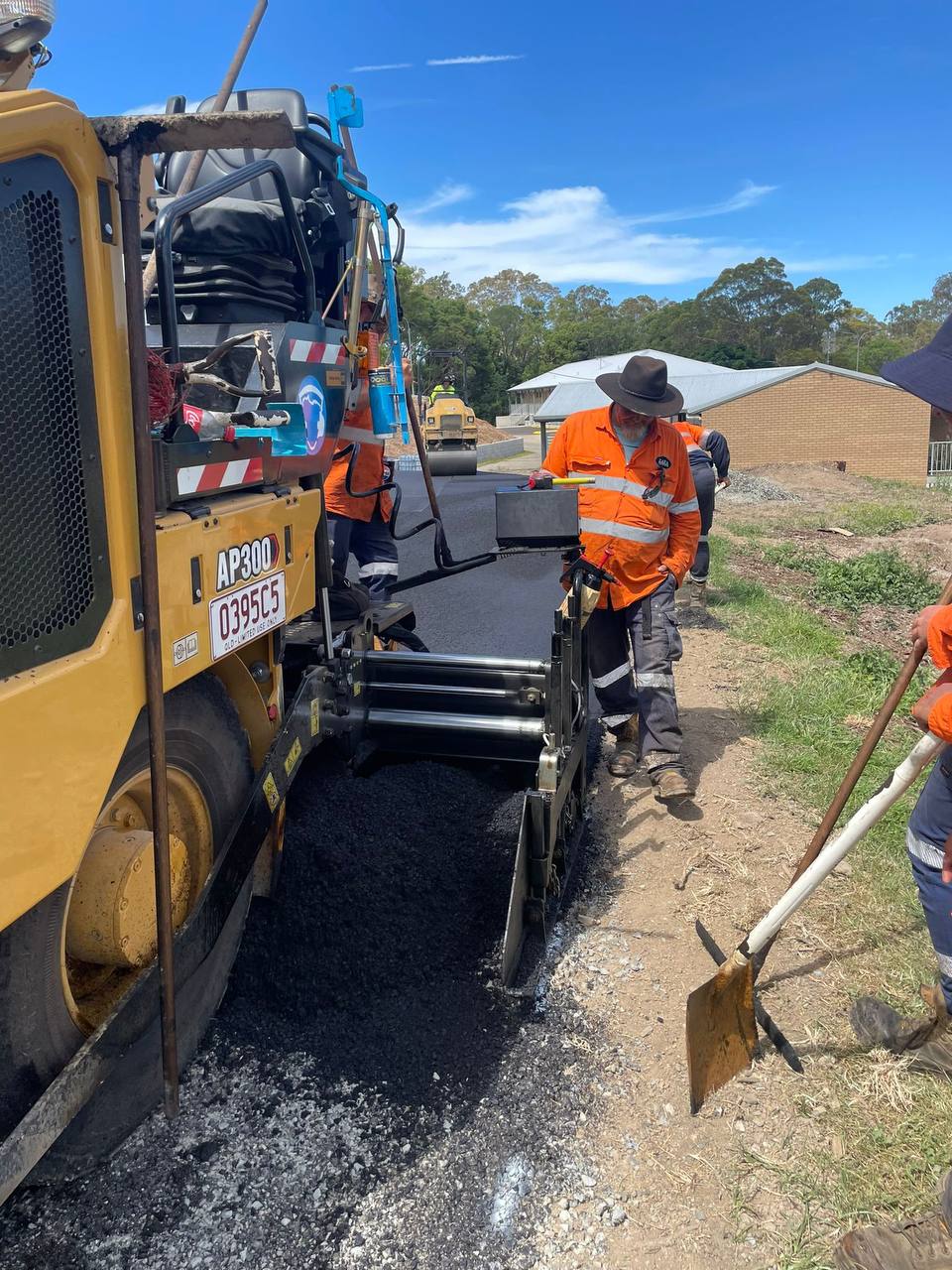
Roads, driveways and access areas are constantly exposed to vehicle traffic, weather and general surface wear. Without an effective wearing surface, these everyday stresses can gradually affect the pavement below. Spray & Seal bitumen provides a practical way to create a protective upper layer that helps shield the pavement while also providing the texture required for regular vehicle use.
At Southport Surfacing Solutions, we provide professional Spray & Seal bitumen and asphalt surfacing services throughout Southport, QLD. Understanding how Spray & Seal works helps explain why careful preparation, correct application and suitable materials are so important to the performance of the finished surface.
What Is a Wearing Surface?
The wearing surface is the uppermost part of a pavement that comes into direct contact with vehicle tyres and the surrounding environment.
It has an important job. Rather than allowing traffic and weather to act directly on the pavement base, the wearing surface provides a durable outer layer designed to cope with everyday exposure.
An effective wearing surface helps provide:
- Consistent vehicle access
- Surface texture and tyre grip
- Protection against traffic wear
- Reduced moisture penetration
- A more durable pavement finish
Spray & Seal creates this layer by combining bitumen binder with carefully selected aggregate.
How Is Spray & Seal Applied?
Spray & Seal construction generally begins with a properly prepared pavement. A controlled application of bitumen binder is sprayed across the surface before aggregate is spread over it.
The aggregate is then rolled so that the stone becomes embedded into the bitumen.
This creates a surface in which the two materials perform complementary roles. The bitumen provides adhesion, sealing and flexibility, while the aggregate forms the exposed wearing layer that vehicles travel over.
The quality of the finished pavement depends on getting each stage right.
Bitumen Creates the Protective Seal
Bitumen is fundamental to the performance of Spray & Seal.
Once applied correctly, the binder forms a continuous layer across the prepared pavement. This helps seal the underlying surface and limits opportunities for water to penetrate into the pavement structure.
Moisture management is particularly important because water entering through cracks or poorly sealed areas can gradually weaken the materials beneath the surface.
By creating a protective bituminous layer, Spray & Seal helps preserve the pavement supporting the traffic above.
Aggregate Creates the Trafficable Surface
Bitumen alone does not form the complete Spray & Seal wearing surface. Aggregate is applied while the binder is ready to receive it and is then rolled into position.
The aggregate becomes the part of the surface that interacts directly with vehicle tyres.
It contributes to:
- Surface texture
- Vehicle traction
- Resistance to everyday wear
- Protection of the bitumen layer underneath
Aggregate selection is therefore an important part of achieving a suitable finished surface.
Rolling Bonds the Materials Together
Compaction through rolling is another critical stage of Spray & Seal installation.
The objective is to seat the aggregate securely into the bitumen so the materials work together as a stable wearing surface. If aggregate is not embedded correctly, the finished seal may not perform as intended.
Professional installation requires careful control over the application of the binder, aggregate spreading and rolling process rather than simply placing one material over another.
The Surface Helps Resist Everyday Traffic Wear
Vehicle tyres continually apply forces to pavement surfaces through normal driving, braking, acceleration and turning.
The aggregate layer in Spray & Seal is designed to receive much of this direct traffic exposure while the bitumen holds the aggregate and protects the pavement underneath.
This makes Spray & Seal suitable for a range of appropriately designed traffic areas where a durable, textured wearing surface is required.
Spray & Seal Helps Limit Water Penetration
Keeping water away from the pavement foundation is one of the most valuable functions of a sealed surface.
Once water reaches supporting pavement materials, those layers may become less stable. Repeated traffic over weakened areas can then contribute to deformation, cracking and pothole development.
A properly constructed Spray & Seal surface helps reduce moisture infiltration by sealing the prepared pavement.
However, the surface should still be supported by appropriate grading and drainage. Water should be encouraged to leave the pavement rather than remaining in low areas.
Surface Texture Supports Vehicle Traction
The exposed aggregate gives Spray & Seal its distinctive textured finish.
Correct surface texture provides contact between vehicle tyres and the pavement, supporting predictable steering and braking during normal use.
The finished result depends on selecting suitable aggregate and achieving appropriate embedment into the binder. This is another reason professional application matters.
Why the Pavement Base Still Matters
A protective wearing surface cannot compensate for a weak foundation.
Spray & Seal relies on the pavement beneath it for structural support. If the base moves excessively, contains unstable material or has significant depressions, those problems can eventually affect the sealed surface.
Before Spray & Seal is applied, preparation may involve:
- Correcting uneven areas
- Repairing existing defects
- Preparing the pavement base
- Establishing appropriate levels
- Compacting supporting materials
- Ensuring effective drainage
The stronger and more consistent the preparation, the better foundation the wearing surface has to perform.
Grading Supports the Protective Surface
A correctly graded pavement helps Spray & Seal perform its protective role by directing rainfall away from the trafficable area.
Low points can allow water to remain on the surface, while unsuitable falls may direct runoff towards vulnerable edges.
Professional grading establishes a suitable pavement profile before sealing so that water can move away efficiently.
This means drainage protection begins beneath the Spray & Seal itself.
Can Spray & Seal Protect an Existing Surface?
In suitable circumstances, Spray & Seal can be used as part of maintaining or renewing an existing pavement.
If the underlying structure remains stable but the surface is showing general wear, a new seal may help restore the wearing layer and provide renewed protection.
Existing defects must be addressed first. Simply sealing over significant potholes, unstable sections or structural movement will not correct the underlying problem.
Professional assessment determines whether the existing pavement is suitable for the treatment.
What Can Reduce the Performance of Spray & Seal?
Several factors can affect how well a Spray & Seal surface performs.
These include:
- Inadequate pavement preparation
- Poor compaction
- Existing structural weaknesses
- Unsuitable drainage
- Incorrect application
- Unresolved surface defects
- Traffic demands not considered during pavement preparation
Good surfacing therefore involves much more than the final application of bitumen and aggregate.
Maintenance Helps Preserve the Wearing Surface
Even a professionally constructed wearing surface should be monitored over time.
Early attention to localised deterioration can help prevent small defects from spreading. Property owners should watch for loose material, developing cracks, damaged edges, potholes and areas where water regularly collects.
Maintenance is most effective when developing problems are addressed before they affect deeper pavement layers.
Why Professional Spray & Seal Application Matters
Creating a reliable Spray & Seal surface requires the correct combination of preparation, binder application, aggregate distribution and rolling.
At Southport Surfacing Solutions, we assess surfacing projects throughout Southport, QLD according to the condition of the site and the intended use of the pavement. This allows the preparation and surfacing process to be planned around the requirements of the area rather than applying the same approach to every project.
Professional workmanship throughout each stage helps create a wearing surface capable of protecting the pavement and supporting dependable everyday use.
Conclusion
Spray & Seal creates a protective wearing surface by combining a bitumen binder with a layer of aggregate that is rolled securely into place. The bitumen helps seal the pavement against moisture penetration, while the aggregate provides the textured, trafficable surface exposed to everyday vehicle movements. Together, these materials create a practical protective layer over a properly prepared pavement.
The performance of Spray & Seal ultimately depends on more than the materials themselves. Stable foundations, correct grading, effective drainage and professional application all contribute to the durability of the finished surface.
For property owners and businesses in Southport, QLD, Southport Surfacing Solutions provides professional Spray & Seal bitumen and asphalt surfacing services tailored to individual site requirements. If an existing surface needs attention or you are considering a new sealed pavement, our experienced team can assess the area and recommend an appropriate solution for reliable long-term performance.
Call us on: 07 3113 9392
Click here to find out more about Southport Surfacing Solutions
Click here to complete our contact form and see how we can help with your driveways.